Thursday, 30 July 2020

A Few of Our Favourite Books

At our little yellow school, we love books!  Our daily story times are something we all look forward to.  From picture books to chapter books, it is never too early to begin reading to a child.  Maria Montessori believed that the sensitive period for language development is between birth and age 6.

At our Montessori school, reading aloud is always encouraged, whether it is by an adult or a fellow student.


Reading with a friend.


Here are a few of our favourite books.  These are the books we must have multiple copies of as we simply cannot survive without them.

Owl Babies by Martin Waddell
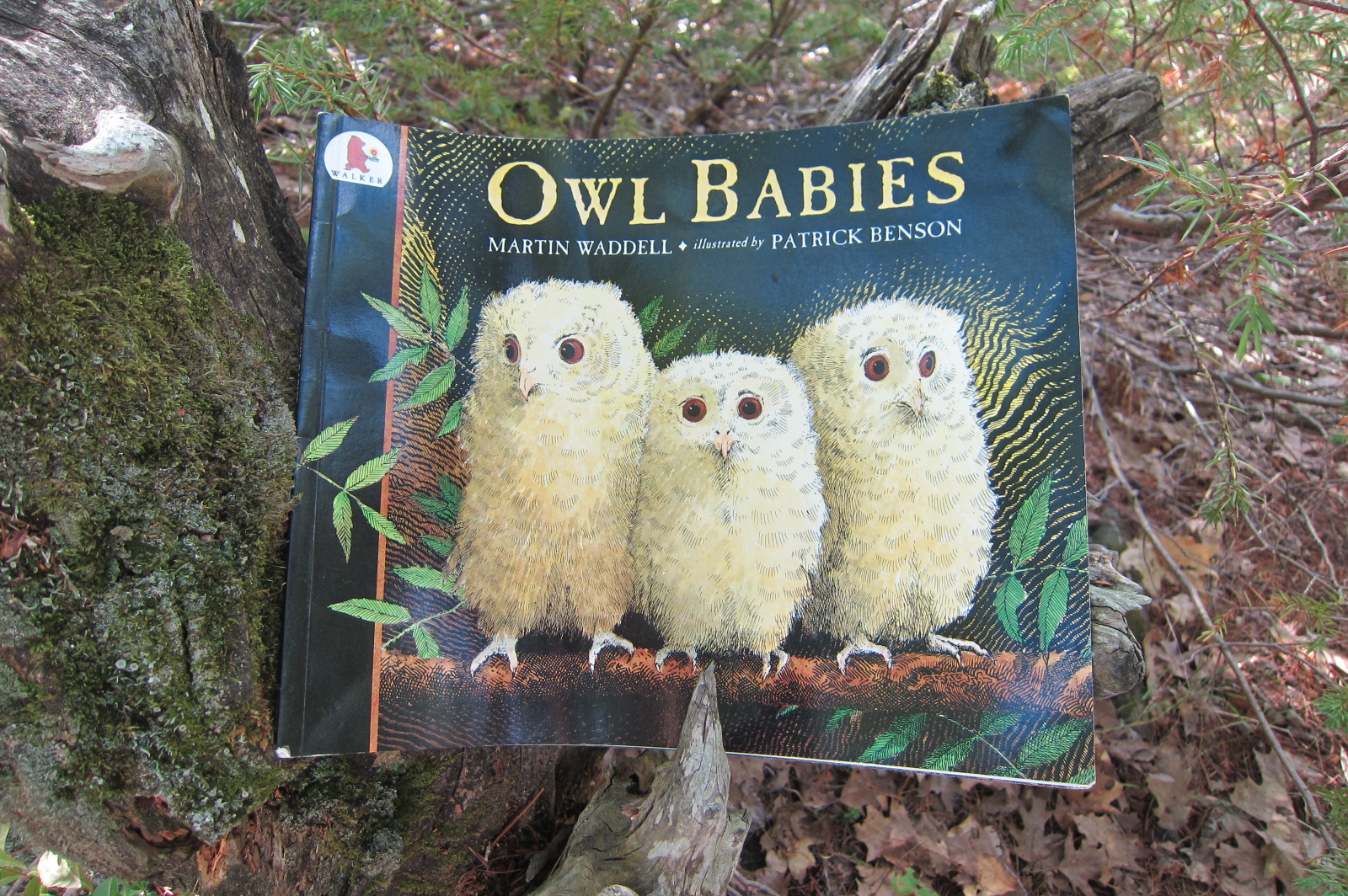


Our #1 favourite!  We often read this at the beginning of the school year when children are having difficulty separating from their parents.  Three owl babies are left alone while their mommy goes looking for food.  The older two are quite stoic, while little Bill says "I want my mommy."  After a few pages, the children know what Bill will say and often join in as the story is read.  Mommy owl does come back.  This helps to reassure our little ones that mommies always come back.  


Where The Wild Things Are by Maurice Sendak


This is a beloved classic that the children could hear every single day.


It is the story of Max, a little boy in a wolf costume.  Max misbehaves and is sent to his room.  His room transforms into a forest and Max sails in a boat to where the wild things are.  Oh how we love to join the wild things as "they roared their terrible roars, and gnashed their terrible teeth, and rolled their terrible eyes and showed their terrible claws".  Max is able to tame them by staring into their eyes without blinking once.  The wild things make Max their leader and the wild rumpus starts!  After a while Max wants to be where someone loves him best of all, back in his room and his house.  It is a great story about taming our own monsters and the power of unconditional love. 


The Bad Seed and The Good Egg by Jory John

Our students could hear these stories every week.  They are very funny books that make us laugh!


The Bad Seed is about a bad seed.  A baaaaad seed.  He seems to relish in his badness.  During the story we find out what happened to him in his life to make him that way.  As the story progresses, the bad seed decides to change his ways and become a good seed.  Well, mostly good.  The children can relate to and empathize with the bad seed.

The Bad Seed


The Good Egg is about a good egg.  A verrrrry good egg indeed.  Unfortunately, he is stuck in a carton with 11 bad eggs.  The good egg tries to keep the peace between the bad eggs in his dozen.  It becomes too much for him and he eventually cracks up.  He goes on a voyage of self-discovery and returns to his carton.  Upon his return, the other eggs in his dozen are happy to see him.  In the end, the good egg finds the balance between being good to his fellow eggs while being good to himself.


The Good Egg


The Darkest Dark by Chris Hadfield (Canadian astronaut)


The Darkest Dark


Chris Hadfield is a Canadian astronaut.  This book is based on Chris's childhood and encourages children to dream the impossible dream.  As a child, Chris loved rocket ships and outer space.  Unfortunately, he was afraid of the dark.  When he watches the first moon landing on television, he realizes that space is the darkest dark there is.  Instead of being afraid, he discovers that space is exciting when you have your dreams to keep you company.  This book has beautiful illustrations and is very simply told.


The Paper Bag Princess by Robert Munsch


The Paper Bag Princess

This book reverses the stereotype that a princess needs to be rescued by a prince to live happily ever after.  Princess Elizabeth is to marry Prince Ronald.  A dragon comes along and destroys their castle, clothing, everything.  Princess Elizabeth must wear a paper bag.  The dragon also kidnaps Prince Ronald.  Princess Elizabeth outwits the dragon and rescues Prince Ronald.  He is ungrateful and asks her to come back when she looks like a real princess.  In the end, Princess Elizabeth rejects Prince Ronald and dances into the sunset.  Girls and boys can't get enough of strong, brave Princess Elizabeth.


Click, Clack, Moo  Cows That Type by Doreen Cronin


Click, Clack, Moo  Cows That Type

Farmer Brown's cows find an old typewriter in the barn.  They type letters to Farmer Brown demanding various items.  "Dear Farmer Brown, The barn is very cold at night.  We'd like some electric blankets.  Sincerely, The Cows"  When they do not receive the electric blankets, they go on strike and there is no milk.  Then the hens want electric blankets or else no eggs.  All Farmer Brown hears all day is "Click, clack, moo.  Click, clack, moo.  Clickety, clack, moo."  Once the children realize the pattern, they join in.


This is just a sampling of our favourites.  There are so many others including Whistle for Willie, Peter's Chair and The Snowy Day by Ezra Jack Keats, The Day the Crayons Quit by Drew Daywalt, Chester by Melanie Watt and Don't Let the Pigeon Drive the Bus by Mo Willems.

Friday, 1 May 2020

Practical Life Materials ~ The Dressing Frames


The Montessori casa (preschool) classroom is divided into five areas.  These areas are Practical Life, Sensorial, Language, Mathematics and Culture.  This blog post is about the Dressing Frames, a key material in the Practical Life area of the classroom.  

The Practical Life activities are the first activities the child is introduced to in the Montessori classroom.  They satisfy the child's inner desire for self-sufficiency and independence.  These activities provide the child with real life experiences with real materials and tools.  

The Practical Life activities fall into three basic categories - Manipulative Skills, Care of the Person and Care of the Environment.

Activities for the development of Manipulative Skills include pouring, spooning, opening containers, handling a book and unrolling and rolling a floor mat.  


Opening and Closing Activity

Opening and Closing Activity


Activities for Care of the Person include washing hands and face, combing your hair, grace and courtesy role playing to learn how to behave socially and the Dressing Frames.


Large Button Dressing Frame


Activities for the Care of the Environment include dusting, sweeping, settling a table, sorting cutlery, watering plants and gardening.


Gardening


The Dressing Frames are a key material in the acquisition of skills needed for self-care. 

The Dressing Frames


This material consists of frames with different closings:

large button frame
small button frame
zipper frame
velcro frame
buckling frame
snapping frame
hook and eye frame
lacing frame
bow frame
safety pin frame


Snapping Frame

Bow Frame

Buckling Frame


The primary purpose of the Dressing Frames is to enable children to gain independence by learning how to get dressed and care for their personal appearance.  The Dressing Frames also develop and challenge the child's co-ordination and fine motor skills.

The large button frame is the first frame introduced to the child.  


Large Button Frame


This is followed by the zipper frame.  As their skills develop, they work with the more challenging frames.

 
Young children want to do things for themselves.  It is so frustrating to a child when they are not able to zip up their coat, unbutton their sweater or tie their shoes.  The Dressing Frames enable each child to practice these skills in an unhurried way.

They are able to practice...


practice......


practice.....


practice......


for as long as they want.


It is such a joy to watch the child fully concentrating on the task at hand.  What a delight to witness their pride when they have accomplished their task!


I did it!


"Help me to do it myself."

~ Maria Montessori
 

Monday, 13 April 2020

Spring Science ~ Growing Seeds in A Jar

While we are all at home, we invited everyone to join us in a spring experiment.  Have you ever wondered what happens to a seed when you plant it in the ground?  Let's find out how seeds grow!

For this experiment, you will need a few simple things that can be found around the house.

Materials

- a clean jar
- paper towels
- dried beans  (You may wish to soak your beans.)
- water


Our Materials

Steps:

1.  Fill the jar with paper towels.


The Jar


2.  Add water to the jar taking care not to flood it.

3.  Push some bean seeds down the sides of the jar.  Ensure
     that they are visible and supported by the paper towels.

Adding Beans to the Jar

4.  Place the jar in a sunny spot.


Observations:

What happened to the bean seeds?

After a few days, my bean seeds sprouted roots.  This is called germination. 


My bean seed has begun to sprout.

The roots grew down.  The job of the root is to find food for the growing plant.  Roots also support and anchor the plant to the ground.


The roots are very fine.

The Root


Slowly but surely, the bean seeds began to grow a stem.  The stem grows up toward the light.  It carries water and minerals from the root to the rest of the plant.


The stem begins to emerge.

Can you see the leaves beginning to peep out?

The growing stems.

Can you see the leaves?

The Stem

Over time, the stems became longer and stronger.  The leaves appeared.  Leaves grow out from the stem.  Their job is to make food for the plant.


The Leaves


My bean plants are getting too big for my jar!


My growing bean plants!


I am going to carefully plant them in a pot and take care of them indoors.  When the weather gets warmer, we can (hopefully) plant them in the vegetable garden at school!  That is something wonderful to look forward to!


Inside a seed is the promise of new life.  Here are some great books about seeds that we have at school.

Books about seeds from our school library.


Here is a fun action song about a growing bean.


I'm a Little Bean Action Song


I'm a little bean small and round,
(curl up on the floor)

Bury me deep into the soft, soft ground,
(sung in a very deep voice)

Sprinkle me with water,
(act out watering with a watering can)

Sunshine too,
(make your arms big and round like the sun)

Watch me grow as tall as you!
(stand and stretch up to the sky)

Thursday, 16 January 2020

It's a New Year! ~ Measuring Time

Hello 2020!  It's a new year and a new decade.  


At our little yellow school, the new year has brought much excitement and also many questions.  Why is the calendar so important?  How long is a year, a month, a day?  What a perfect time to learn about how we measure time.  

Our exploration began with a look at a year.  A lot happens in a year!  A year is 365 days and lasts from January through to December.

It's January!

The Earth travels around the sun once every 12 months.  This period of time is called a year.


Setting out the months of the year.
 
Setting out the months of the year.
 
The Months of the Year

The Earth is tilted to one side.  The Earth is rotating while revolving around the sun.


Rotating and Revolving

While the Earth is revolving around the sun, different parts of it face the sun.  This gives us our seasons.


Seasons Classifying Work

Working Together


We did it together!


We are also learning our months and seasons in French.


Learning the months that make us each season.


What happens in each season?

 
Each month has 28 to 31 days.  This is because of the moon.  It takes the moon about four weeks to travel once around the Earth.  The first month is always January.


Filling in the Month of January


Months are comprised of weeks.  A week lasts seven days.  There are 52 weeks in a year.  A week begins on Sunday and ends on Saturday.  Saturday and Sunday are weekends, while the days in between are weekdays.


Ordering the Days of the Week
 
It is always great to work together!

The Days of the Week

There are 7 days in a week.  How long is a day?  A day is 24 hours.  That's how long it takes for the Earth to spin around one time.  We have day when our part of the Earth is facing the sun.  We have night when our part of the Earth is facing away from the sun. 


Telling Time with the Clock


A new year, months, days and hours ~ 2020 holds many treasures.   We look forward to the joys and delights that the year has in store for us!


"And now we welcome the new year, full of things that have never been."

~ Rainer Maria Rilke